The Child everyone expects so much from, The Adult who fails to deliver
August 7, 2026
I'm finally releasing what I’m calling a branded short film, Masking. It’s a product of the Vancouver Freelance Creatives spec challenge, where the community was split into teams to create a project together. Our team was tasked with creating a commercial, but the final video definitely drifts away from what we may typically expect from an ad. The product is barely featured, and the tone is far from safe; however, it’s a reflection of the direction I wish marketing continues to go—I hope we get to see more ads that focus on community building through authentic representation, with less tokenism and vapid pandering, more immersion and listening to the source.
I suppose that’s why I’m writing this: to delve into the source behind this particular topic.
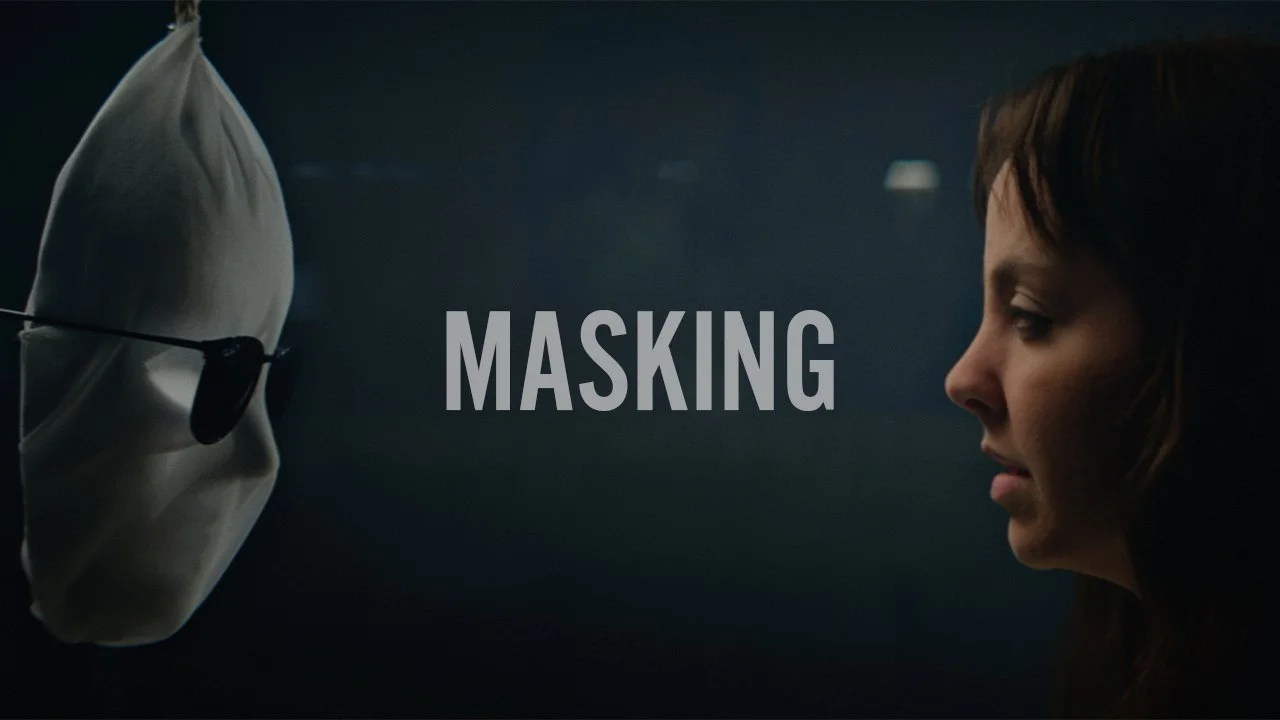
As the name suggests, this is a piece that attempts to convey the psychological journey of masking. Masking is often discussed in relation to neurodiversity, particularly autism, but it appears to be increasingly understood and experienced in neurotypical settings. We all mask to a degree, filtering thoughts and actions to better manage social dynamics.
But creating this film has led me to believe that there may be many degrees of separation between masking for a neurodivergent mind and a neurotypical one. One is an inconvenience and a filter; the other is a mandated smothering and self-induced erasure. The difference became most apparent to me when various people were providing feedback on the project at various stages. There were people who understood the concept and could empathize with the experience depicted on screen, and there were others who understood masking, but their version seemed to be a far less stressful one. For example, they could not imagine why sticking out in a social situation would lead to aggression. Finally, there were people who could not grasp anything without extensive explanation.
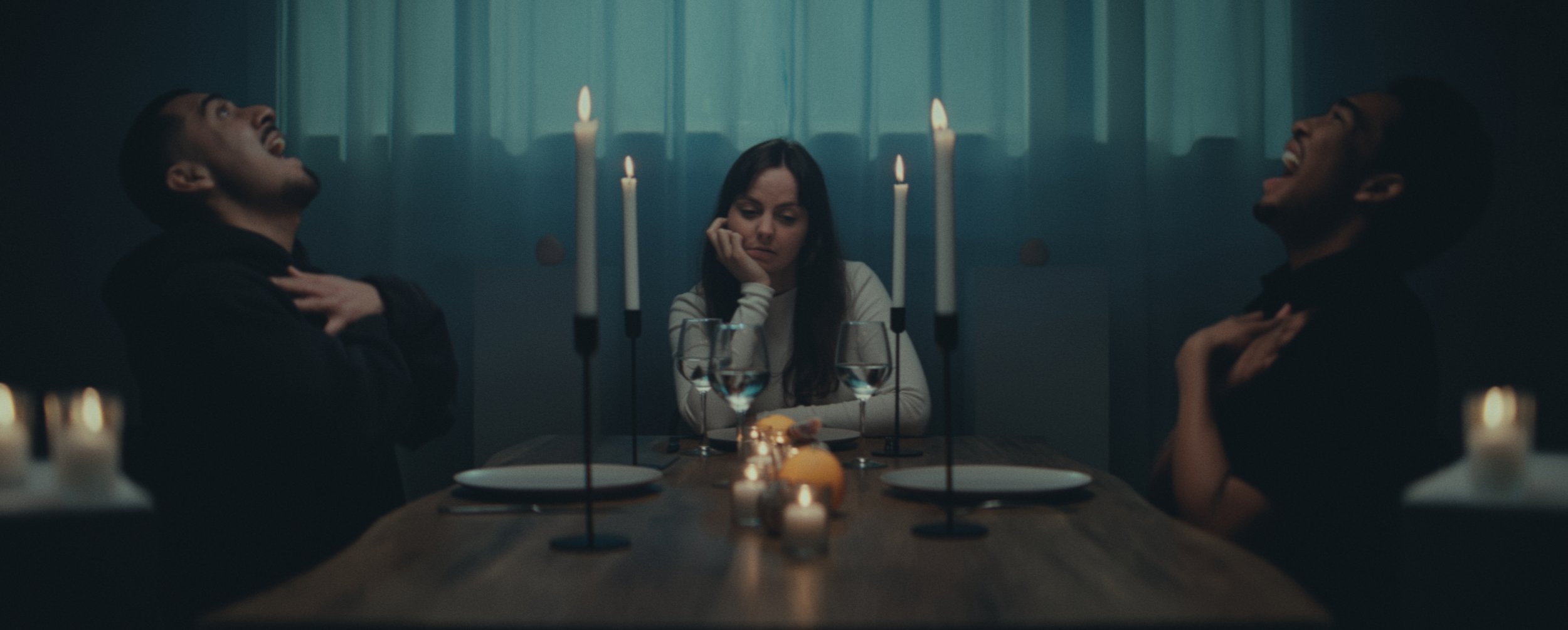
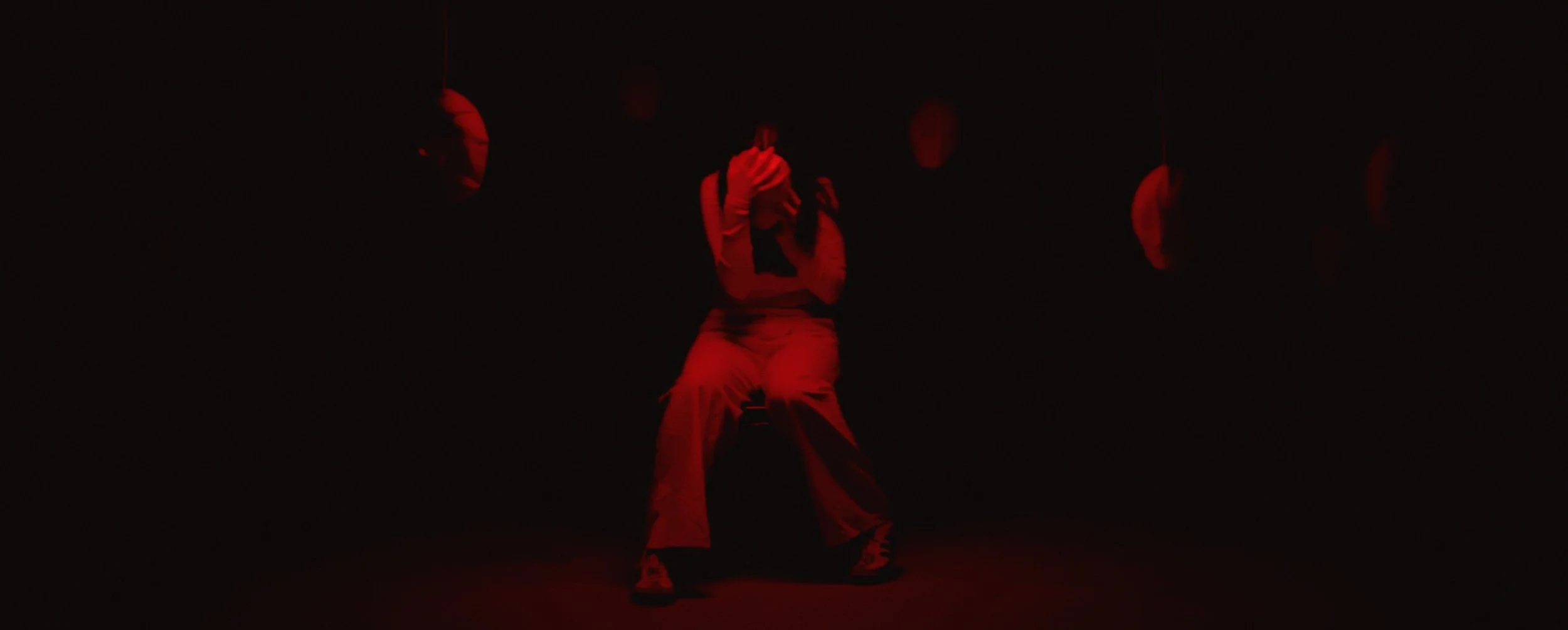
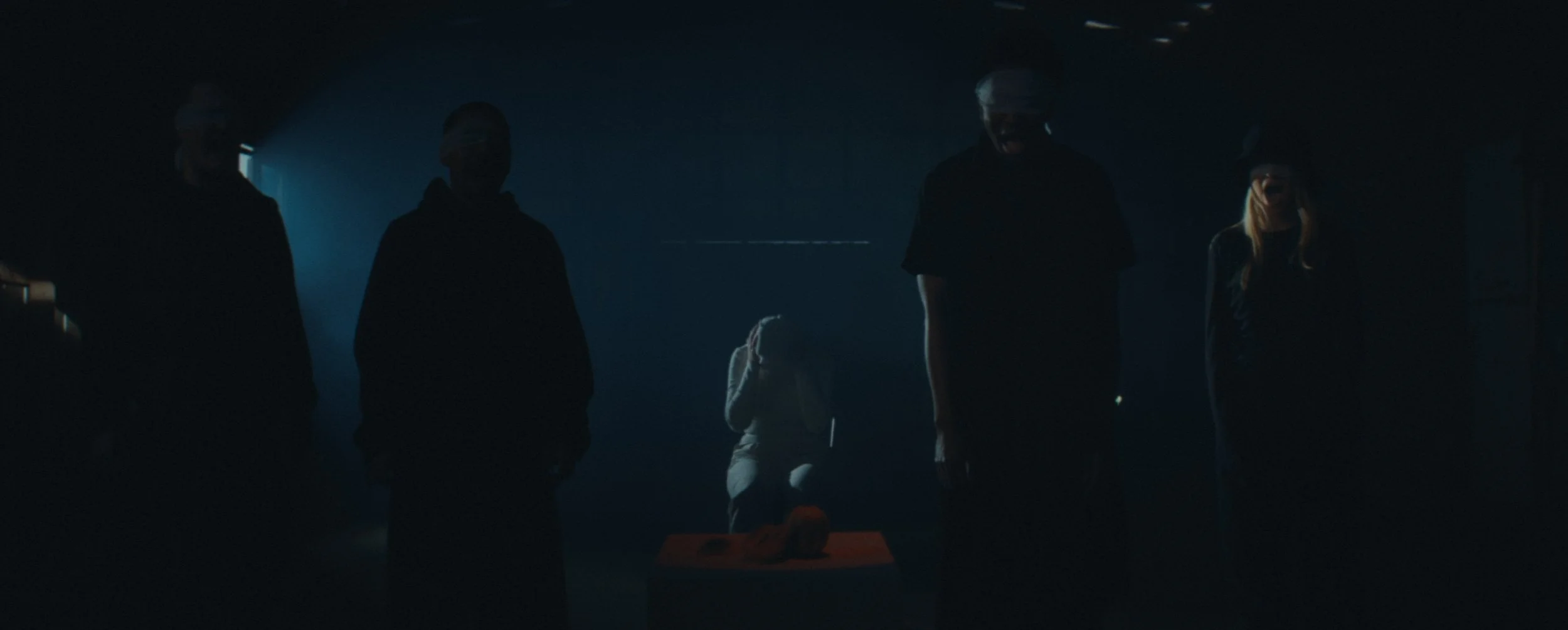
For me, what you see on screen is not intended to exaggerate, nor is it eerie for the sake of being eerie. To me, the tone is matter-of-fact, a sober look at what it can be like when learning how to mask. In the film, we skip the circumstances that instil the need to mask within Alice—that, to me, is a given. We instead look at the first few failed attempts at masking. I assume it could vary between individuals, but my masking is heavily rooted in pattern recognition, which is what informs the scenes. As a result, it was important to me that we depict a process of reducing behaviour such as laughing or crying into a sort of choreography that can be mimicked. The result is something that is understandably unnatural, but again, to me, it’s a logical progression borne of an innate desire to fit in and forcibly trying to distill social dynamics into regimented mechanics. So though we see laughing and crying depicted, these are interpretations of laughing and crying that our character is trying to emulate.
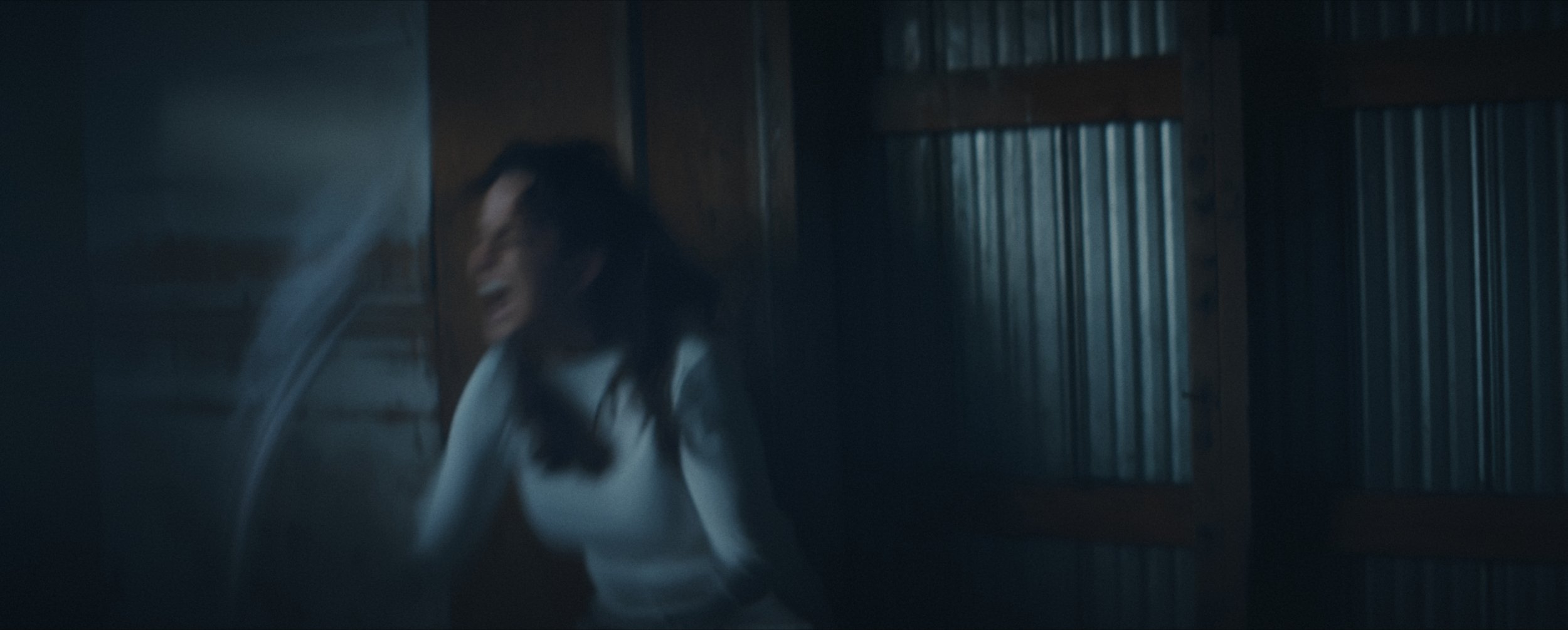
The first authentic emotion that Alice feels after repeatedly failing to successfully mask is anger. It becomes the anchor from which she can coordinate what her masks need to look like moving forward, which is another important note: I don’t personally believe the ‘solution’ to masking is the utter rejection of it.
We often seek solutions that are one-dimensional or simple, but whenever humans are involved, I find that fails to reflect our nature. For brevity, we can always deem masking as simply ‘bad,’ but I believe masking is a necessary ingredient in social systems. It allows for a social situation to continue, to play out its course. It assists with overall communal success, which may contribute to an overall net positive. Negative effects such as emotional burnout or unstable identity can, of course, occur, but they most likely are dependent on the severity and frequency of the masking. So the question(s) I hope we can wrestle with: what is a healthy level of masking and what does it look like?
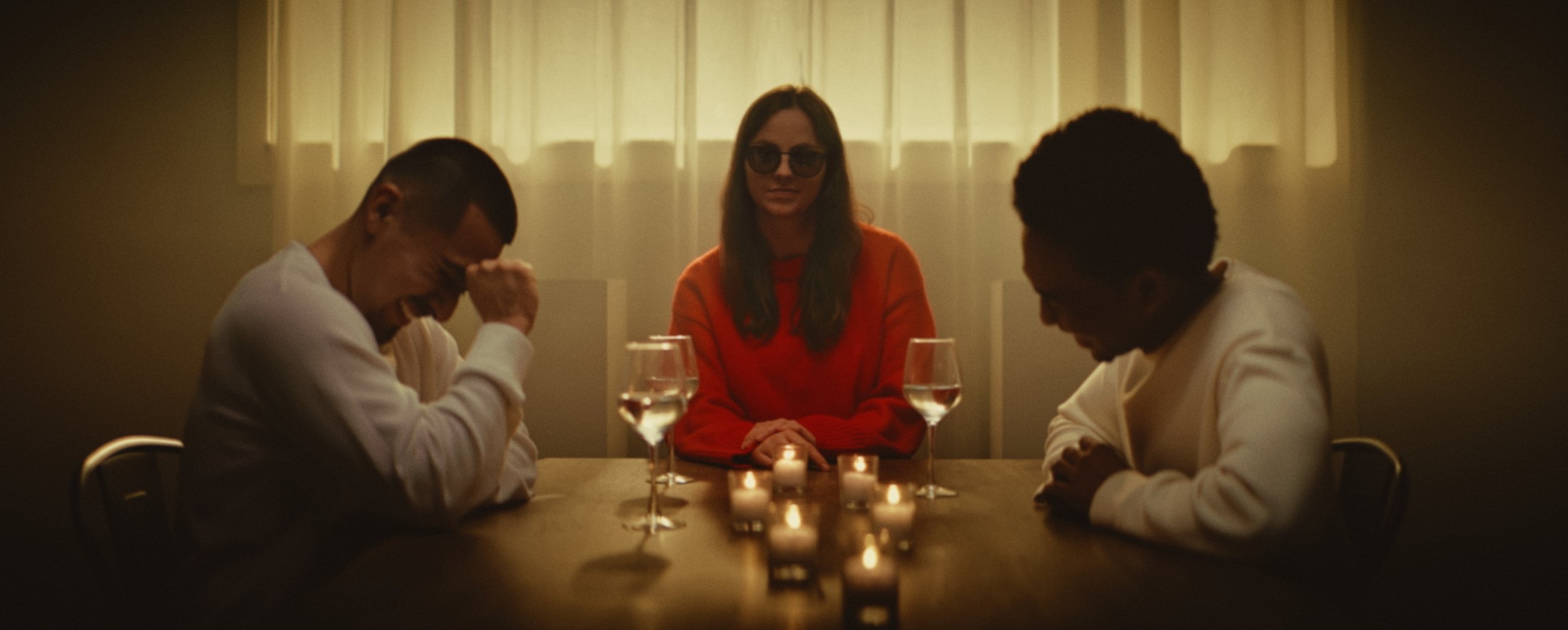
In the video, we end not with Alice laughing alongside the other characters, nor is she impassioned in the remaining scenes. She participates just enough to allow the scene to play out, masking at a low intensity.
To further understand this, let’s return to what defines neurotypical masking relative to neurodivergent masking, as I believe this distinction is crucial to understanding what an “optimal” level of masking looks like. The two are similar, but I believe neurodivergent masking involves higher stakes and intensity, leading to heightened duress. Neurotypical masking is defined by hiding parts of yourself, learning to behave in a manner that is appropriate to the situation at hand. The lack of masking may be deemed inappropriate and the stakes are limited to things like temporary reprimands. I picture it as the equivalent of ensuring that you clean up your home before having guests over. It’s a common courtesy (could just be my Korean background speaking) to present a clean home for guests, so it’s ideal to tidy up—temporarily stuffing mess into closets if needed. The standard of cleanliness probably fluctuates depending on the relationship with the guests.
A messy home may go unnoticed by guests. In other cases they may feel slightly uncomfortable but tolerant, and finally there may be people who feel slighted, not wanting to return. Even if guests respond negatively, however, though unpleasant, the solution is simple: if you care to cater to your guests (because there’s always the ultimatum where they tolerate or leave), you can simply tidy up. There is a clear throughway to resolving future issues. Moreover, your home is still intact—if anything, the push to clean your home is probably a good thing in retrospect.
With neurodivergent masking, I picture needing to comprehensively renovate a home before having guests over. Perhaps this home lacks a front door and is only accessible via a ladder connected to a window. Perhaps the walls are caked with torrential technicolor murals (or devoid of colour if it’s my home) that are bound to trigger something for someone. Perhaps the home finds structure through plants, animals, broken-in literature, dormant memorabilia, half-finished projects, haphazard piles of journals. Perhaps there is no place to hide things, or even no home at all, just an empty lot. In these cases, the solution is understandably not as simple. Cleaning will be overwhelming or insufficient, and will not necessarily lead to a “cleaner” or better state. You thus must either try to tear your home down and recreate it according to what the general public deems to be acceptable, or spend an outrageous amount of money renting an Airbnb temporarily. I suppose you can also opt for complete isolation. Regardless, this is what I picture neurodivergent masking as. Your home, your identity, is highly unlikely to be understood and accepted as is—and you probably learn this the hard way.
A proposed solution though (and something I am not confident that the film gets across adequately): you learn to take the neurotypical approach where the foundation of your home stays untouched but you clean up what you reasonably can so that the energy expenditure is roughly the same. If guests still receive it in disdain, you can choose to disengage with them.
Of course, even if neurodivergent individuals learn to employ this strategy, the only way for this to avoid complete isolation is for the majority to accept a wider understanding on what constitutes a home in the first place, or for neurodivergent individuals to find their own immediate community. This is the part that I hope media like this short film and accompanying commentary can play.
—————
Let’s step away from the label neurodivergent for a moment, because I technically am borrowing the term as there currently is none I can claim. This in itself is shameful, but that will be for a future topic.
I admittedly take some liberty with the term, neurodivergent, because the label prescribed to me at a young age, ‘giftedness,’ does not particularly feel like a safe one to adorn. As a result, I have only shared this with select individuals in my personal life, and chose to reject it internally from middle school to around 3 years ago. Yet, I would like to find ways to explore this and to seek out community for all the aforementioned reasons.
To me, the choice to label giftedness as such is an outrageous oversight for a type of brain that will absolutely fixate on the connotations and implications of such a label. How silly, how short-sighted. But I suppose it makes sense given its origins.
From what I currently understand, giftedness was historically determined by IQ, and the most popular tools are still Wechsler intelligence scales, but newer frameworks have expanded to include other cognitive and environmental dimensions.
It’s also unfortunate that there is a bias in the research toward studying giftedness in youth rather than adults, though I can see the connection to research funding and the importance of taking a neurodevelopment lens.
I was going to dive into the neurophysiological differences, but decided it’s probably quite opaque and boring. If you’re curious, however, reach out and I’ll share some research articles. For a lay of the land, start with searching Reuwsaat et al. (2026) or Kuznetsova et al. (2024), both of which compile older frameworks. Dabrowski is a prominent name as well.
What may be more relevant to the film, however, is one area of giftedness research: the topic of asynchronous development. This refers to intellectual, emotional, and physical skills developing at different rates than that of peers, and most likely explains why giftedness can often look like an individual being stronger than their peers in one area, but synchronized or behind in other areas.
There is an organization in Belgium called Hoogbloeier that’s put together some points I find particularly close to my own experience with asynchronous development. Highly recommend reading their page in full.
“A discrepancy where cognitive development significantly outpaces that of peers while emotional or social skills remain more in line with chronological age can lead to inner tensions and difficulties in social situations, especially if there is a lack of appropriate support and understanding (Silverman, 1997)."
“This feeling of 'being different' can undermine the child's self-image, leading to insecurity, social withdrawal, and even fear of being themselves (Silverman, 1997)."
“Or imagine a ten-year-old who dives into discussions about the ethics of global issues but is ignored on the playground because they’re not interested in talking about popular TV shows. These scenarios can make a child feel 'abnormal' and contribute to the development of a negative self-image (Silverman, 1997)."
“Some children try to adapt to their environment by hiding their talents. For instance, they might deliberately use simpler vocabulary, pretend not to understand certain concepts, avoid discussing topics that reflect their interests, or even change their appearance or behavior… These adjustments are often made to avoid standing out but can lead to underachievement and a loss of personal identity. Children who consistently suppress their own needs and interests to gain social acceptance risk experiencing feelings of emptiness and self-alienation over time (Alsop, 2003)."
Sounds a lot like masking. Seems a lot like neurodivergence.
So though giftedness is not often mentioned in these talks and most likely will lag behind other, more currently acceptable kinds of neurodivergence, I strongly hope that there is more awareness and interest in the field, especially in research on adults.
Because sometimes, it is honestly, quite shitty.
Not a great tone to end on, I suppose…but I guess reflective of the tone of the piece. Though I say it was intended to be matter-of-fact, I can’t help but muse that some bitterness seeped its way in.
Regardless, hope you enjoy it.
-ps. I’m also cognizant of the dissonance between the title and the content of this post. Hopefully I can muster up the energy to unpack the title some day. I promise there’s more nuance to it than what it suggests.
-Joon